How to Talk to Your Subconscious (So It Actually Listens)

Guest Whispers Spotlight: Leïla Bendimered of Attachment Alchemy.
At Soul’n Soma, Guest Whispers is a sacred space where new voices are invited to share their truths around intimacy, healing, and holistic connection. In this edition, I’m honored to feature the evocative words of Leïla Bendimered – somatic guide and creator of Attachment Alchemy.
In this piece, Leïla invites us into the rich and often misunderstood world of the subconscious, showing how visualization isn’t just a calming tool – but a powerful key to emotional regulation, safety, and transformation. With poetic clarity and grounded wisdom, she reveals how your inner imagery holds the power to shape your outer reality.
🌿 A Note from Anke from Soul’n Soma
This post was Originally Published on Attachment Alchemy. When I came across this post by Leïla, I felt an immediate resonance. Her insights into the subconscious, emotional regulation, and somatic imagery mirror so much of what we do as VITA™ Certified Coaches. I reached out to her because I knew her words would speak to the hearts of many of you journeying with me here at Soul’n Soma.
Supporting clients in learning to speak the language of the body, rewire limiting patterns, and build safety from within is at the core of my own practice – and I’m honored to share Leïla’s perspective as part of that tapestry.
Let it inspire you, ground you, or open a door inward.
How to Talk to Your Subconscious (So It Actually Listens)
“You are lying on a sandy beach. The sun warms your skin. Waves crash gently nearby. A breeze brushes your face…"
Feel more relaxed already?
You’re probably still hunched over your laptop, sipping lukewarm tea (or sitting on the toilet—hey, no judgment!). And yet, your body responded as if you were truly lying on that beach.
Why?
Because your subconscious mind doesn’t care whether something is real or imagined. If it sees an image, it believes it. No questions asked.
Your Subconscious Can’t Tell the Difference
This is why we flinch during horror movies, cry during sad Netflix episodes, and feel stressed just imagining Monday morning.
Your subconscious is the backstage operator of your entire inner world. It processes millions of bits of information every second—far more than your logical, conscious mind can handle. Its job? Keep you safe. Predict danger. Save energy.
But here's the kicker: it doesn’t do nuance. It doesn’t know that the creepy music in that film is just acting. Or that your boss's email isn't a lion attack.
It sees drama → triggers fear. It sees sunshine → triggers calm.
And that’s where visualisation becomes a superpower.
The Magic of Mental Imagery
Your brain doesn’t just process thoughts. It processes images. That’s why we say, “I see what you mean.” Visual information is fast, emotionally powerful, and instantly absorbed by the subconscious.
In fact, neuroscience shows that the same regions of your brain light up whether you experience something or imagine it. Your nervous system literally reacts to imagined stimuli as if they were real.
So, if you imagine being calm, supported, or powerful—your subconscious believes it.
If you imagine being overwhelmed or alone—it believes that, too.
Visualisation in Somatic Practices
Somatic therapy (body-based healing) uses this principle all the time.
When someone is caught in an intense emotion—rage, fear, grief—we don’t tell them to “calm down” (because LOL, when has that ever worked?). Instead, we ask them to describe the feeling:
“Where do you feel it in your body?” “What colour is it?” “What shape does it take?”
Let’s say someone feels anger in their chest.
They might say:
“It’s red and boiling, like hot lava erupting from a volcano.”
Now we invite imagery:
“What would happen if a wave of cool, blue ocean water flowed over the lava?”
Guess what? The body calms down. The image alone changes the physiological response.
Not because they “solved” the situation. But because they sent a clear visual signal to their subconscious:
We are safe now.
You Can Talk To Your Subconscious (And You Should)
Most of us live in reaction mode, unknowingly ruled by our subconscious. Carl Jung famously said:
“Until you make the unconscious conscious, it will direct your life and you will call it fate.”
Translation? If you don’t become aware of what your inner world is doing, you’ll keep replaying the same old scripts.
Because here’s the truth:
Your subconscious isn’t interested in your well-being. It’s interested in your survival.
It doesn’t care if you’re happy. It cares if you’re alive.
Which is why, if your subconscious believes “emotions = danger” or “success = risk,” it will keep pulling you back into anxiety, people-pleasing, self-sabotage, or freezing up in key moments.
Unless… you interrupt the pattern.
Visualisation = A Direct Line to Change
Visualisation is one of the most effective ways to reprogram the subconscious.
✨ Want more confidence?
Picture yourself speaking clearly, standing tall, being received warmly.
✨ Want to feel safe in conflict?
Imagine yourself grounded, breathing calmly, setting a boundary with ease.
✨ Want to process a tough emotion?
Turn it into an image—and then shift the image.
This isn’t just woo-woo magic. It’s brain science. Repetition + visual input = new neural pathways. And those pathways lead to new reactions, behaviours, and ultimately… new realities.
The Takeaway
You can’t control everything that happens to you—but you can change the story your brain tells about it.
And when you learn to speak the language of your subconscious—images, sensations, stories—you take your power back.
You stop being run by old survival code. You start creating from safety, clarity, and vision.
That’s what I teach my clients.
We don’t just “talk about feelings”—we get under the hood. We learn how to regulate the nervous system, access inner imagery, and shift emotional patterns that have run the show for years.
Because when you change the story inside, everything outside starts to shift.
Guest Whispers Spotlight: Leïla Bendimered
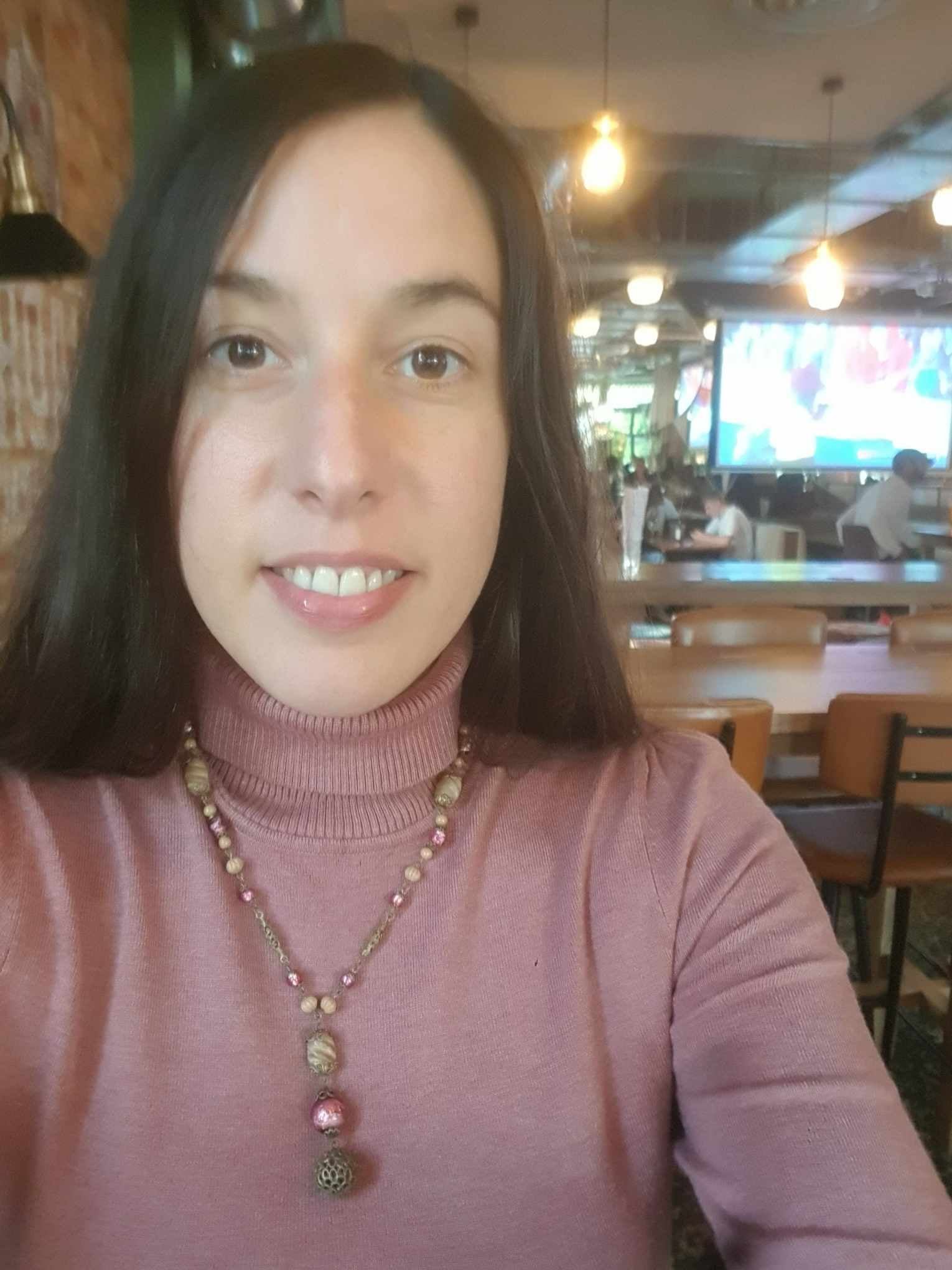
For over a decade, Leïla Bendimered worked as a translator for esteemed organizations such as the European Commission and the United Nations, using language to bridge cultures and connect people. Her deep passion for human connection eventually led her into the world of personal development and coaching. Leïla is certified in Neotantric Coaching (VITA™), specializing in intimacy and self-love, as well as Integrated Attachment Theory (IAT™), which incorporates insights from cognitive and behavioral neuroscience.
Alongside coaching, Leïla writes fiction and short stories that explore themes of identity, desire, healing, and the quiet moments that define us. Her creative process is deeply linked to her inner work, which includes journaling, emotional regulation, and subconscious reprogramming.
Since 2020, Leïla has been guiding people toward deeper self-acceptance, secure relationships, and more authentic lives. Whether through written words or one-on-one sessions, her work is all about helping individuals come home to themselves and learn to tell their story from that place.